Mac and cheese is America's definitive comfort food — a dish that transcends age, income, and region to land on more dinner tables than almost any other. At 164 kcal per 100 g, it delivers 6.5 g of protein, 8 g of fat, 16 g of carbohydrates, and 0.5 g of fiber. The origins trace to medieval English and Italian cookbooks, but it was Thomas Jefferson who popularized it in America after encountering macaroni in Paris and having a pasta machine shipped to Monticello. The Kraft boxed version, introduced in 1937 at 19 cents a box during the Depression, fed a nation and cemented mac and cheese as the American pantry essential it remains today — 65% of water gives it that saucy, comforting consistency.
Calcium (180 mg, 18% DV) from the cheese is the nutritional bright spot, supporting bone density and muscle contraction. Sodium (480 mg, 21% DV) is significant — driven by the cheese, butter, and pasta water — and the primary mineral to watch for those eating mac and cheese regularly. Phosphorus (160 mg, 23% DV) works alongside calcium for bone health and ATP production. Vitamin A (85 mcg RAE, 9% DV) from butter and cheese supports vision and immune function. Potassium (110 mg) contributes modest cardiovascular support. Iron (0.8 mg) from the enriched pasta aids oxygen transport. The cheese also provides small but meaningful amounts of vitamin B12, zinc, riboflavin, and vitamin K2 — a form of vitamin K increasingly studied for its role in directing calcium into bones rather than arterial walls.
The cheese sauce is everything. Start with a roux: melt 2 tablespoons of butter, whisk in 2 tablespoons of flour, and cook for 1 minute (this eliminates the raw flour taste). Gradually whisk in 400 ml of warm milk — add it slowly to prevent lumps. Once thickened (about 5 minutes), remove from heat and stir in 200 g of sharp cheddar, grated — never pre-shredded, which contains anti-caking agents that prevent smooth melting. A pinch of mustard powder and a dash of cayenne elevate the flavor from basic to brilliant. Cook the pasta 2 minutes short of al dente (it finishes cooking in the sauce or oven). For a crispy top, transfer to a baking dish, top with buttered breadcrumbs, and broil for 3-4 minutes until golden. Avoid processed cheese — it melts smoothly but tastes flat. A mixture of sharp cheddar and gruyère produces the best balance of flavor and texture.
| Nutrient | Per 100 g | Per serving |
|---|---|---|
| Calories | 164 kcal | 328 kcal |
| Protein | 6.5 g | 13.0 g |
| Fat | 8 g | 16.0 g |
| Carbohydrates | 16 g | 32.0 g |
| Fiber | 0.5 g | 1.0 g |
| Sugar | 2 g | 4.0 g |
| Water | 65 g | 130.0 g |
| Vitamins & Minerals | ||
| Sodium | 480 mg | 21% |
| Calcium | 180 mg | 14% |
| Phosphorus | 160 mg | 13% |
| Vitamin A | 85 mg | 9444% |
| Potassium | 110 mg | 2% |
| Iron | 0.8 mg | 4% |
| Serving | Calories | Protein | Fat | Carbohydrates |
|---|---|---|---|---|
| 100 g | 164 kcal | 6.5 g | 8 g | 16 g |
| serving (200 g) | 328 kcal | 13.0 g | 16.0 g | 32.0 g |
| 1 cup (150 g) | 246 kcal | 9.8 g | 12.0 g | 24.0 g |
| Food | Calories | Protein | Fat | Carbohydrates |
|---|---|---|---|---|
| Mac and Cheese | 164 kcal | 6.5 g | 8 g | 16 g |
| Clam Chowder | 82 kcal | 4.5 g | 3.5 g | 8 g |
| Coleslaw | 99 kcal | 0.8 g | 7.5 g | 7 g |
| Shepherd's Pie | 110 kcal | 6.5 g | 5 g | 10 g |
| Chicken Pot Pie | 180 kcal | 8.5 g | 10 g | 14 g |
Use our calorie calculator to find your daily calorie needs.
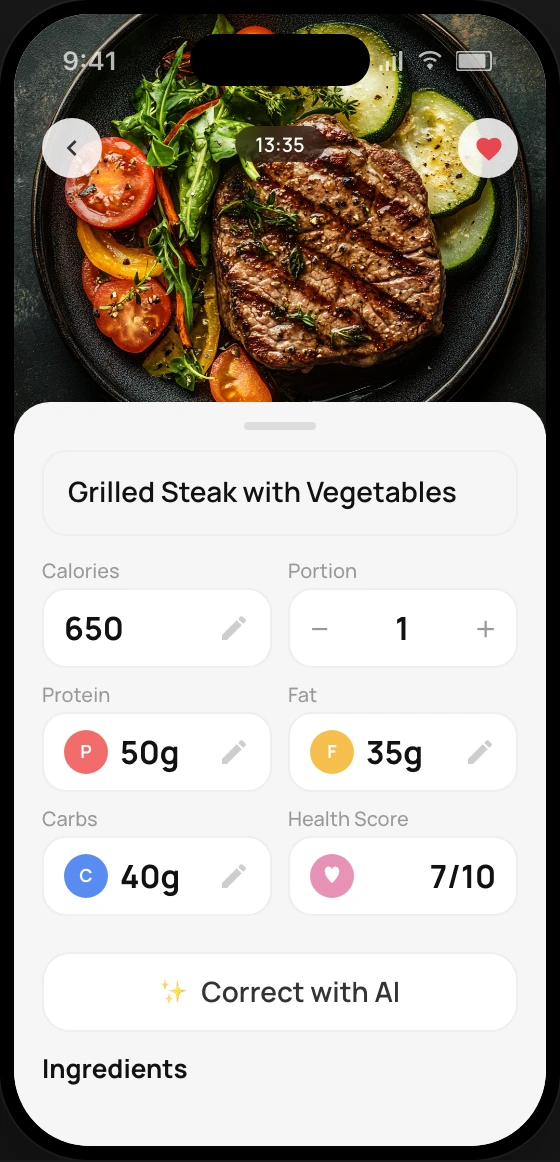
Snap a photo of your meal — CalZen AI instantly calculates calories, protein, carbs, and fat. No manual entry needed.