Quinoa earned its superfood reputation through hard biochemistry, not marketing. At 120 kcal per 100 g cooked, it delivers 4.4 g of complete protein — containing all nine essential amino acids in proportions the human body can actually use, something no true cereal grain achieves. Add 21.3 g of complex carbohydrates, 1.9 g of heart-healthy unsaturated fat, and 2.8 g of fiber, and you have one of the most nutritionally balanced single foods available. The Inca Empire called it the "mother of all grains" and fed it to their armies before battle — NASA has studied it as a candidate crop for long-duration space missions. Its 71.6 g of water per 100 g cooked keeps the texture light and fluffy.
Quinoa's mineral density is exceptional among grains. Magnesium (64 mg, about 15% DV) relaxes blood vessels and supports insulin sensitivity. Phosphorus (152 mg, 22% DV) is critical for ATP production and bone mineralization. Potassium (172 mg) counterbalances sodium to maintain healthy blood pressure. Iron (1.5 mg) and copper (0.19 mg) work in tandem for hemoglobin production, while zinc (1.09 mg) and manganese (0.63 mg, 27% DV) strengthen immune and antioxidant systems respectively. Folate (42 mcg, 11% DV) is vital for DNA replication and especially important during pregnancy. Vitamin E (0.63 mg) provides fat-soluble antioxidant protection. The B-vitamin suite — thiamin (0.11 mg), riboflavin (0.11 mg), niacin (0.41 mg), and B6 (0.12 mg) — drives the enzymatic conversion of those 21.3 g of carbs and 4.4 g of protein into usable energy. Selenium (2.8 mcg) rounds out the profile with thyroid support.
Always rinse quinoa under cold running water for 30-60 seconds before cooking — the seeds are coated in saponins, naturally bitter compounds that protect the plant from insects but taste soapy to humans. Use a 1:1.75 quinoa-to-water ratio, bring to a boil, cover, and simmer on the lowest heat for 15 minutes. You will know it is done when the tiny spiral germ separates from the seed — that visible curl is the sign of a perfectly cooked grain. Fluff with a fork and let it sit uncovered for 5 minutes so excess moisture evaporates. Quinoa absorbs dressings beautifully, making it ideal for grain bowls and cold salads with roasted vegetables, feta, and lemon vinaigrette. Store dry quinoa in a sealed container for up to two years; cooked quinoa refrigerates well for five days or freezes for up to two months.
| Nutrient | Per 100 g | Per serving |
|---|---|---|
| Calories | 120 kcal | 222 kcal |
| Protein | 4.4 g | 8.1 g |
| Fat | 1.9 g | 3.5 g |
| Carbohydrates | 21.3 g | 39.4 g |
| Fiber | 2.8 g | 5.2 g |
| Sugar | 0.9 g | 1.7 g |
| Water | 71.6 g | 132.5 g |
| Vitamins & Minerals | ||
| Thiamin (B1) | 0.11 mg | 9% |
| Riboflavin (B2) | 0.11 mg | 8% |
| Niacin (B3) | 0.41 mg | 3% |
| Vitamin B6 | 0.12 mg | 7% |
| Folate | 42 µg | 11% |
| Vitamin E | 0.63 mg | 4% |
| Iron | 1.5 mg | 8% |
| Magnesium | 64 mg | 15% |
| Phosphorus | 152 mg | 12% |
| Potassium | 172 mg | 4% |
| Zinc | 1.09 mg | 10% |
| Copper | 0.19 mg | 21% |
| Manganese | 0.63 mg | 27% |
| Selenium | 2.8 µg | 5% |
| Serving | Calories | Protein | Fat | Carbohydrates |
|---|---|---|---|---|
| 100 g | 120 kcal | 4.4 g | 1.9 g | 21.3 g |
| 1 cup cooked (185 g) | 222 kcal | 8.1 g | 3.5 g | 39.4 g |
| Food | Calories | Protein | Fat | Carbohydrates |
|---|---|---|---|---|
| Quinoa (cooked) | 120 kcal | 4.4 g | 1.9 g | 21.3 g |
| Oatmeal (cooked) | 68 kcal | 2.4 g | 1.4 g | 12 g |
| Corn | 86 kcal | 3.3 g | 1.4 g | 18.7 g |
| Buckwheat (cooked) | 92 kcal | 3.4 g | 0.6 g | 19.9 g |
| Millet (cooked) | 119 kcal | 3.5 g | 1 g | 23.7 g |
Use our calorie calculator to find your daily calorie needs.
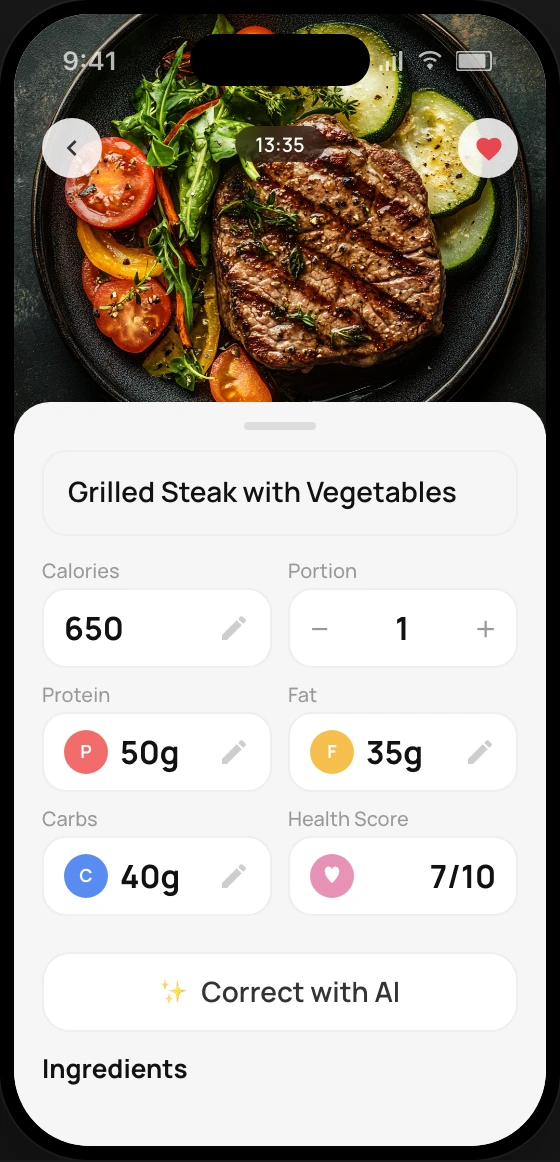
Snap a photo of your meal — CalZen AI instantly calculates calories, protein, carbs, and fat. No manual entry needed.