White rice feeds more than half the world every single day, and at 130 kcal per 100 g of cooked grain it earns that role honestly. Each serving delivers 28.2 g of carbohydrates — nearly pure starch that the body converts to glucose faster than almost any other whole food — alongside 2.7 g of protein and a negligible 0.3 g of fat. That rapid energy release is exactly why endurance athletes from Kenyan marathon runners to Japanese sumo wrestlers build their diets around it. The 68.4 g of water per 100 g cooked weight keeps the grain fluffy and easy to digest, making rice one of the few foods recommended during gastrointestinal recovery.
Enriched white rice is a surprisingly strong source of folate (58 mcg, about 15% DV), the B-vitamin essential for DNA synthesis and especially critical during pregnancy. Iron comes in at 1.2 mg — meaningful when consumed in the quantities typical of Asian diets. Selenium (7.5 mcg, roughly 14% DV) supports thyroid function and acts as an antioxidant cofactor. Manganese (0.47 mg, about 20% DV) activates enzymes involved in bone formation and carbohydrate metabolism. Phosphorus (43 mg) and magnesium (12 mg) contribute to energy production at the cellular level, while zinc (0.49 mg) and copper (0.07 mg) round out a modest but consistent mineral profile. Thiamin (0.02 mg) and niacin (0.4 mg) complete the B-vitamin picture, fueling the conversion of those 28.2 g of carbs into usable ATP.
The single most important technique is the rinse: wash rice in cold water three to four times until the water runs mostly clear. This removes surface starch and prevents gummy, clumped grains. For long-grain varieties, use a 1:1.5 rice-to-water ratio; for short-grain sushi rice, go 1:1.2. Bring to a boil, then drop to the lowest possible heat, cover tightly, and cook for 18 minutes without lifting the lid. Let it rest covered for 10 minutes after the heat is off — steam finishes the job. For fried rice, cook a day ahead and refrigerate uncovered so the grains dry out and separate in the wok. Store cooked rice in the fridge for no more than four days, and always reheat to steaming hot — Bacillus cereus spores survive cooking and can multiply at room temperature.
| Nutrient | Per 100 g | Per serving |
|---|---|---|
| Calories | 130 kcal | 205 kcal |
| Protein | 2.7 g | 4.3 g |
| Fat | 0.3 g | 0.5 g |
| Carbohydrates | 28.2 g | 44.6 g |
| Fiber | 0.4 g | 0.6 g |
| Sugar | 0.1 g | 0.2 g |
| Water | 68.4 g | 108.1 g |
| Vitamins & Minerals | ||
| Thiamin (B1) | 0.02 mg | 2% |
| Niacin (B3) | 0.4 mg | 3% |
| Folate | 58 µg | 14% |
| Iron | 1.2 mg | 7% |
| Manganese | 0.47 mg | 20% |
| Selenium | 7.5 µg | 14% |
| Phosphorus | 43 mg | 3% |
| Magnesium | 12 mg | 3% |
| Zinc | 0.49 mg | 4% |
| Copper | 0.07 mg | 8% |
| Serving | Calories | Protein | Fat | Carbohydrates |
|---|---|---|---|---|
| 100 g | 130 kcal | 2.7 g | 0.3 g | 28.2 g |
| 1 cup cooked (158 g) | 205 kcal | 4.3 g | 0.5 g | 44.6 g |
| 1 cup dry (185 g) | 241 kcal | 5.0 g | 0.6 g | 52.2 g |
| Food | Calories | Protein | Fat | Carbohydrates |
|---|---|---|---|---|
| Rice (white, cooked) | 130 kcal | 2.7 g | 0.3 g | 28.2 g |
| Oatmeal (cooked) | 68 kcal | 2.4 g | 1.4 g | 12 g |
| Corn | 86 kcal | 3.3 g | 1.4 g | 18.7 g |
| Buckwheat (cooked) | 92 kcal | 3.4 g | 0.6 g | 19.9 g |
| Millet (cooked) | 119 kcal | 3.5 g | 1 g | 23.7 g |
Use our calorie calculator to find your daily calorie needs.
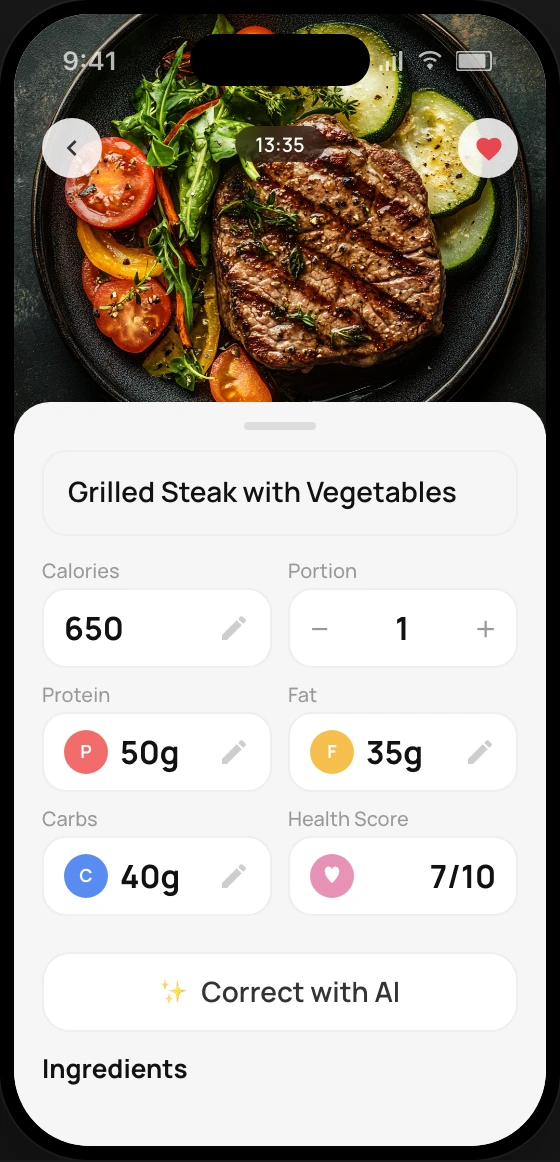
Snap a photo of your meal — CalZen AI instantly calculates calories, protein, carbs, and fat. No manual entry needed.