Lemons are less a fruit you eat and more a culinary tool you deploy — their sharp acidity at 29 kcal per 100 g transforms everything they touch. With 9.3 g of carbohydrates, only 2.5 g of sugar, and 2.8 g of fiber, lemons have one of the lowest sugar-to-fiber ratios in the fruit world. The 88.9 g of water, 1.1 g of protein, and 0.3 g of fat make them calorically negligible, which is fortunate because their value lies in what they do to other foods: brighten flavors, tenderize proteins, prevent oxidation, and deliver a concentrated dose of micronutrients with every squeeze.
Vitamin C is the centerpiece at 53 mg per 100 g (roughly 59 % DV) — historically, this single nutrient made lemons famous when the British Royal Navy mandated citrus rations to prevent scurvy in the 18th century. Beyond immunity, vitamin C is a cofactor for prolyl hydroxylase, the enzyme that stabilizes collagen structure, and it enhances non-heme iron absorption by up to sixfold when consumed with iron-rich plant foods. Folate (11 mcg) supports cell division. Potassium (138 mg) assists blood pressure regulation. Calcium (26 mg) contributes to bone health, and copper (0.037 mg) supports enzymatic reactions in connective tissue formation. The white pith between skin and flesh contains high concentrations of d-limonene, a terpene studied for its anti-inflammatory properties and its ability to support liver detoxification enzymes.
Roll a lemon firmly on the countertop before cutting — this breaks the internal membranes and yields up to 30 % more juice. Microwave for 10 seconds if the lemon is cold and firm. Zest before juicing, always — lemon zest contains the essential oils and more vitamin C per gram than the juice, and it is impossible to zest a juiced lemon. Use a Microplane for fine zest that melts into dressings and batters. Squeeze lemon over cooked greens like spinach and kale to dramatically boost iron absorption. A 50/50 mix of lemon juice and olive oil creates the simplest high-quality salad dressing. Store whole lemons in a sealed bag in the fridge for up to four weeks — they dry out quickly at room temperature. Freeze lemon juice in ice cube trays for year-round access to fresh citrus flavor.
| Nutrient | Per 100 g | Per serving |
|---|---|---|
| Calories | 29 kcal | 17 kcal |
| Protein | 1.1 g | 0.6 g |
| Fat | 0.3 g | 0.2 g |
| Carbohydrates | 9.3 g | 5.4 g |
| Fiber | 2.8 g | 1.6 g |
| Sugar | 2.5 g | 1.4 g |
| Water | 88.9 g | 51.6 g |
| Vitamins & Minerals | ||
| Vitamin C | 53 mg | 59% |
| Folate | 11 µg | 3% |
| Potassium | 138 mg | 3% |
| Calcium | 26 mg | 2% |
| Copper | 0.037 mg | 4% |
| Serving | Calories | Protein | Fat | Carbohydrates |
|---|---|---|---|---|
| 100 g | 29 kcal | 1.1 g | 0.3 g | 9.3 g |
| Medium (58 g) | 17 kcal | 0.6 g | 0.2 g | 5.4 g |
| Juice of 1 (48 g) | 14 kcal | 0.5 g | 0.1 g | 4.5 g |
| Food | Calories | Protein | Fat | Carbohydrates |
|---|---|---|---|---|
| Lemon | 29 kcal | 1.1 g | 0.3 g | 9.3 g |
| Watermelon | 30 kcal | 0.6 g | 0.2 g | 7.6 g |
| Strawberry | 32 kcal | 0.7 g | 0.3 g | 7.7 g |
| Peach | 39 kcal | 0.9 g | 0.3 g | 9.5 g |
| Orange | 47 kcal | 0.9 g | 0.1 g | 11.8 g |
Use our calorie calculator to find your daily calorie needs.
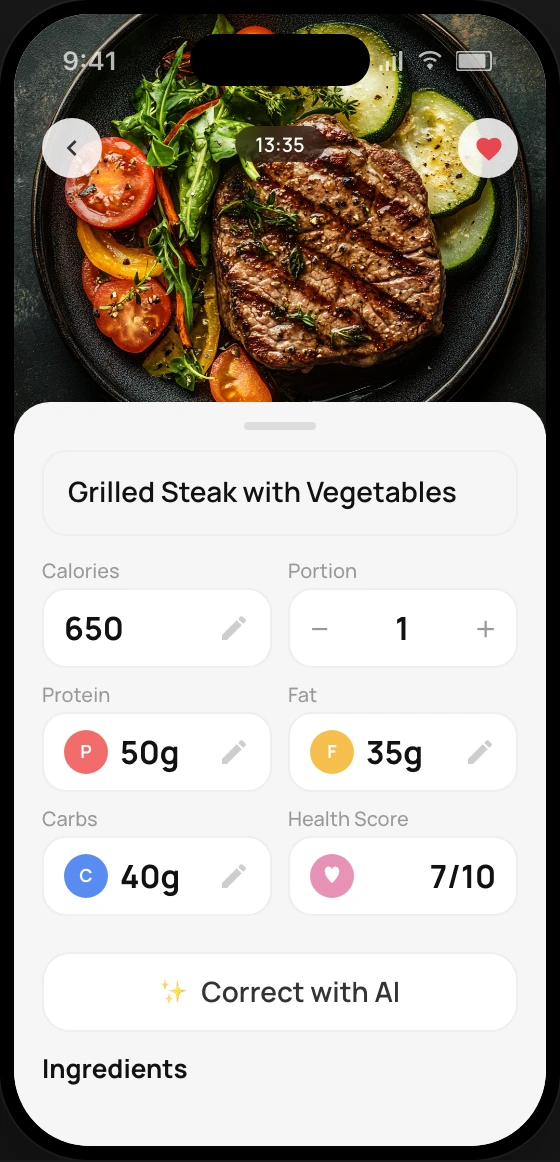
Snap a photo of your meal — CalZen AI instantly calculates calories, protein, carbs, and fat. No manual entry needed.