Cabbage is the unsung hero of the vegetable world — inexpensive, available year-round, and nutritionally stacked at just 25 kcal per 100 g. It delivers 5.8 g of carbohydrates, 3.2 g of sugar, 2.5 g of fiber, and 1.3 g of protein with only 0.1 g of fat. At 92.2 g of water, cabbage is over 90 % liquid, yet it provides a satisfying crunch whether raw in coleslaw or braised in butter. A whole head of cabbage can feed a family for less than the price of a latte, making it pound-for-pound one of the best nutritional investments at the grocery store.
Vitamin C comes in strong at 36.6 mg per 100 g (about 41 % DV) — historically, sauerkraut (fermented cabbage) was the vitamin C source that kept European sailors alive on long voyages. Vitamin K (76 mcg, roughly 63 % DV) is essential for blood clotting and bone calcium regulation. Folate (43 mcg, about 11 % DV) supports DNA synthesis and cell division. Potassium (170 mg) aids blood pressure management. Manganese (0.16 mg) activates metabolic enzymes. As a cruciferous vegetable, cabbage contains glucosinolates — sulfur compounds that convert to isothiocyanates when chopped or chewed. These compounds have been extensively studied for their role in activating phase II detoxification enzymes in the liver. Red cabbage adds anthocyanins to the mix, delivering roughly six to eight times the antioxidant capacity of green cabbage.
Shred cabbage finely for coleslaw and salt it 20 minutes before dressing — the salt draws out water, preventing a soggy slaw and concentrating the crunch. For braised cabbage, cut into wedges and sear cut-side down in butter at high heat until golden, then add a splash of broth, cover, and simmer at low heat for 25 minutes until tender and caramelized. Ferment shredded cabbage with 2 % salt by weight to make sauerkraut — the lacto-fermentation preserves vitamin C while creating probiotics and B vitamins not present in raw cabbage. Store a whole head unwrapped in the crisper drawer for up to two months — cabbage is one of the longest-lasting fresh vegetables. Use the outer leaves for wraps as a low-carb alternative to tortillas.
| Nutrient | Per 100 g | Per serving |
|---|---|---|
| Calories | 25 kcal | 22 kcal |
| Protein | 1.3 g | 1.2 g |
| Fat | 0.1 g | 0.1 g |
| Carbohydrates | 5.8 g | 5.2 g |
| Fiber | 2.5 g | 2.2 g |
| Sugar | 3.2 g | 2.8 g |
| Water | 92.2 g | 82.1 g |
| Vitamins & Minerals | ||
| Vitamin C | 36.6 mg | 41% |
| Vitamin K | 76 µg | 63% |
| Folate | 43 µg | 11% |
| Potassium | 170 mg | 4% |
| Manganese | 0.16 mg | 7% |
| Serving | Calories | Protein | Fat | Carbohydrates |
|---|---|---|---|---|
| 100 g | 25 kcal | 1.3 g | 0.1 g | 5.8 g |
| 1 cup shredded (89 g) | 22 kcal | 1.2 g | 0.1 g | 5.2 g |
| 1 head (908 g) | 227 kcal | 11.8 g | 0.9 g | 52.7 g |
| Food | Calories | Protein | Fat | Carbohydrates |
|---|---|---|---|---|
| Cabbage | 25 kcal | 1.3 g | 0.1 g | 5.8 g |
| Cucumber | 15 kcal | 0.7 g | 0.1 g | 3.6 g |
| Zucchini | 17 kcal | 1.2 g | 0.3 g | 3.1 g |
| Tomato | 18 kcal | 0.9 g | 0.2 g | 3.9 g |
| Spinach | 23 kcal | 2.9 g | 0.4 g | 3.6 g |
Use our calorie calculator to find your daily calorie needs.
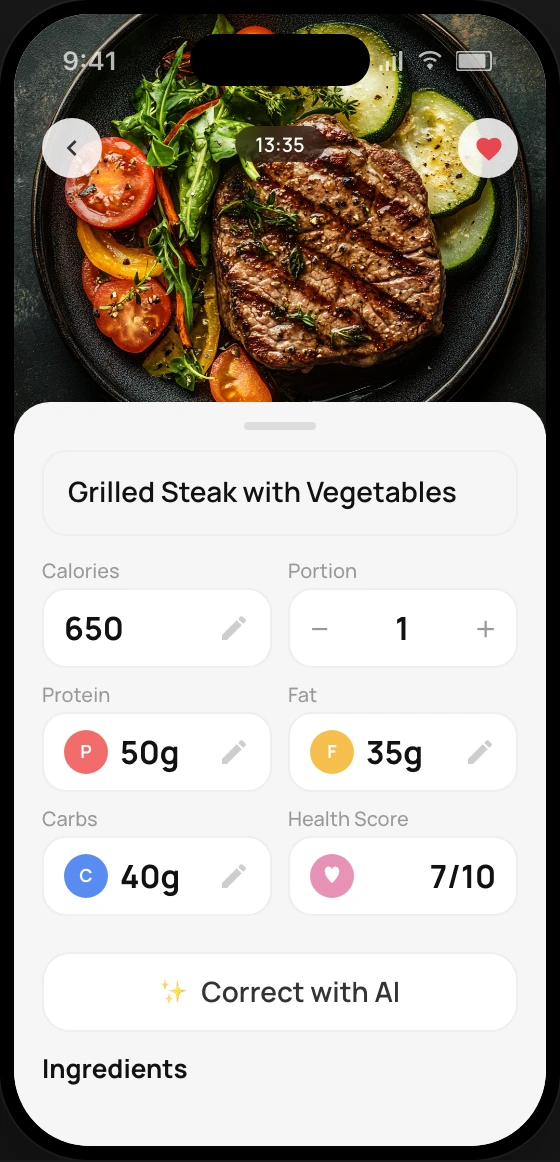
Snap a photo of your meal — CalZen AI instantly calculates calories, protein, carbs, and fat. No manual entry needed.