Cauliflower has gone from forgettable side dish to one of the most versatile low-carb substitutes in modern cooking. At just 25 kcal per 100 g, it offers 5 g of carbohydrates, 1.9 g of sugar, 2 g of fiber, and an impressive 1.9 g of protein — nearly as much as broccoli. With 0.3 g of fat and 92.1 g of water, cauliflower is the blank canvas of the vegetable world: rice it, mash it, roast it, or blend it into pizza dough, and it absorbs surrounding flavors while keeping calories near zero. That adaptability, combined with legitimate nutritional depth, explains why it has become the centerpiece of keto and paleo menus.
Vitamin C leads at 48.2 mg per 100 g (about 54 % DV), rivaling citrus for immune and collagen support. Vitamin K (15.5 mcg, roughly 13 % DV) directs calcium into bones. Folate (57 mcg, about 14 % DV) is critical for DNA synthesis and prenatal health. Vitamin B6 (0.184 mg) supports neurotransmitter production. Pantothenic acid (0.667 mg, about 13 % DV) is essential for coenzyme A synthesis and energy metabolism. Potassium (299 mg) regulates blood pressure and muscle function. Manganese (0.155 mg) activates antioxidant enzymes. As a cruciferous vegetable, cauliflower shares broccoli's sulforaphane-producing pathway — chopping or chewing activates myrosinase, which converts glucoraphanin into sulforaphane, a compound with extensively studied anticancer and detoxification properties.
Roast cauliflower at 230 °C for 25 minutes with olive oil, cumin, and turmeric until deeply caramelized and the edges turn almost black — the high heat triggers the Maillard reaction, creating nutty, addictive flavors that bear no resemblance to the bland steamed version. For cauliflower rice, pulse raw florets in a food processor in two-second bursts until grain-sized — do not over-process or it becomes paste. Sauté the rice in a dry pan for 5 minutes to evaporate moisture before using as a rice substitute. Mash steamed cauliflower with a tablespoon of butter and roasted garlic for a 70 % lower-calorie alternative to mashed potatoes. Steam for just 5 minutes to preserve vitamin C and sulforaphane — overcooking destroys both and creates the sulfurous smell that gives cauliflower a bad reputation.
| Nutrient | Per 100 g | Per serving |
|---|---|---|
| Calories | 25 kcal | 27 kcal |
| Protein | 1.9 g | 2.0 g |
| Fat | 0.3 g | 0.3 g |
| Carbohydrates | 5 g | 5.4 g |
| Fiber | 2 g | 2.1 g |
| Sugar | 1.9 g | 2.0 g |
| Water | 92.1 g | 98.5 g |
| Vitamins & Minerals | ||
| Vitamin C | 48.2 mg | 54% |
| Vitamin K | 15.5 µg | 13% |
| Vitamin B6 | 0.184 mg | 11% |
| Folate | 57 µg | 14% |
| Potassium | 299 mg | 6% |
| Manganese | 0.155 mg | 7% |
| Pantothenic Acid (B5) | 0.667 mg | 13% |
| Serving | Calories | Protein | Fat | Carbohydrates |
|---|---|---|---|---|
| 100 g | 25 kcal | 1.9 g | 0.3 g | 5 g |
| 1 cup chopped (107 g) | 27 kcal | 2.0 g | 0.3 g | 5.4 g |
| 1 head (588 g) | 147 kcal | 11.2 g | 1.8 g | 29.4 g |
| Food | Calories | Protein | Fat | Carbohydrates |
|---|---|---|---|---|
| Cauliflower | 25 kcal | 1.9 g | 0.3 g | 5 g |
| Cucumber | 15 kcal | 0.7 g | 0.1 g | 3.6 g |
| Zucchini | 17 kcal | 1.2 g | 0.3 g | 3.1 g |
| Tomato | 18 kcal | 0.9 g | 0.2 g | 3.9 g |
| Spinach | 23 kcal | 2.9 g | 0.4 g | 3.6 g |
Use our calorie calculator to find your daily calorie needs.
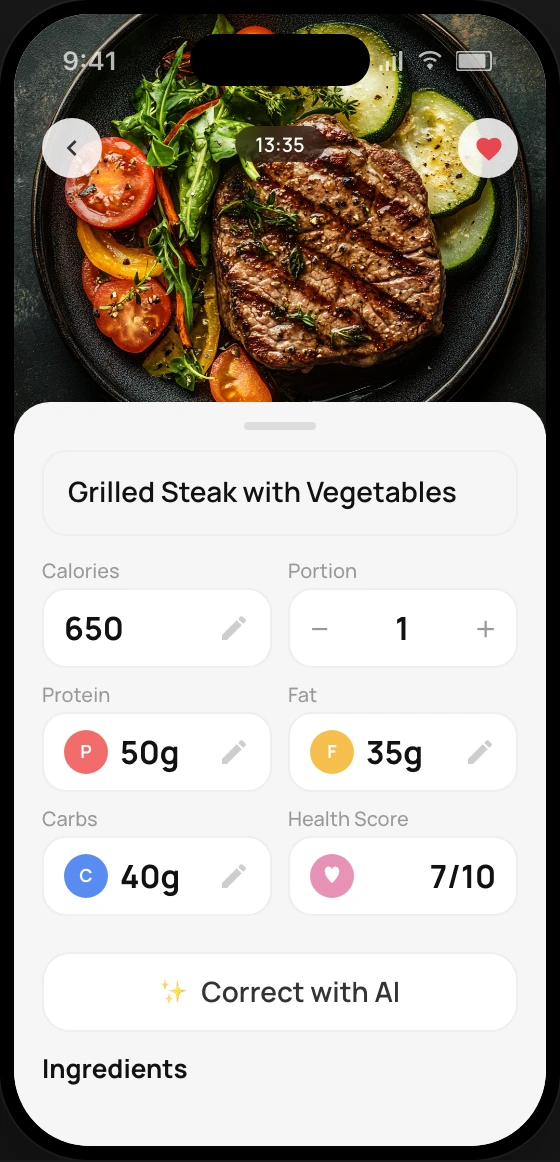
Snap a photo of your meal — CalZen AI instantly calculates calories, protein, carbs, and fat. No manual entry needed.