Pomegranate has been a symbol of abundance since antiquity, depicted in Egyptian tombs and Greek mythology alike. At 83 kcal per 100 g, it delivers 18.7 g of carbohydrates with 13.7 g of sugar and an impressive 4 g of fiber — among the highest fiber counts in the fruit category. With 1.7 g of protein, 1.2 g of fat, and 77.9 g of water, the arils (those jewel-like seeds) offer a satisfying crunch that no other fruit replicates. Each aril is a tiny capsule of juice surrounding an edible seed rich in punicic acid, a conjugated linolenic acid unique to pomegranates.
Vitamin C provides 10.2 mg per 100 g (about 11 % DV), supporting immune function and collagen production. Vitamin K (16.4 mcg, roughly 14 % DV) aids blood clotting and bone metabolism. Folate (38 mcg) is essential for DNA synthesis and particularly important during pregnancy. Potassium (236 mg) helps regulate blood pressure by counterbalancing sodium. Copper (0.158 mg) supports red blood cell formation and neurological health. The deep red color comes from punicalagins and anthocyanins — pomegranate juice has shown antioxidant activity up to three times higher than green tea or red wine in laboratory assays. Ellagitannins in the juice are metabolized by gut bacteria into urolithins, compounds currently studied for their ability to improve mitochondrial function and cellular cleanup through autophagy.
Score the skin along the equator, submerge in a bowl of cold water, and break apart — the arils sink while the white pith floats, giving you clean seeds with zero mess and no stained countertops. Alternatively, cut in half and hold cut-side down over a bowl, then whack the back firmly with a wooden spoon — the arils fall out in seconds. Scatter arils over grain bowls, yogurt, or roasted vegetables for a burst of color, crunch, and tartness. Reduce pomegranate juice with a tablespoon of honey over low heat until syrupy to make pomegranate molasses — a staple of Middle Eastern cooking that transforms roasted meats and salad dressings. Store whole pomegranates in the fridge for up to two months — they are one of the longest-keeping fruits. Extracted arils last about five days refrigerated.
| Nutrient | Per 100 g | Per serving |
|---|---|---|
| Calories | 83 kcal | 72 kcal |
| Protein | 1.7 g | 1.5 g |
| Fat | 1.2 g | 1.0 g |
| Carbohydrates | 18.7 g | 16.3 g |
| Fiber | 4 g | 3.5 g |
| Sugar | 13.7 g | 11.9 g |
| Water | 77.9 g | 67.8 g |
| Vitamins & Minerals | ||
| Vitamin C | 10.2 mg | 11% |
| Vitamin K | 16.4 µg | 14% |
| Folate | 38 µg | 10% |
| Potassium | 236 mg | 5% |
| Copper | 0.158 mg | 18% |
| Serving | Calories | Protein | Fat | Carbohydrates |
|---|---|---|---|---|
| 100 g | 83 kcal | 1.7 g | 1.2 g | 18.7 g |
| Half (87 g) | 72 kcal | 1.5 g | 1.0 g | 16.3 g |
| 1 cup seeds (174 g) | 144 kcal | 3.0 g | 2.1 g | 32.5 g |
| Food | Calories | Protein | Fat | Carbohydrates |
|---|---|---|---|---|
| Pomegranate | 83 kcal | 1.7 g | 1.2 g | 18.7 g |
| Lemon | 29 kcal | 1.1 g | 0.3 g | 9.3 g |
| Watermelon | 30 kcal | 0.6 g | 0.2 g | 7.6 g |
| Strawberry | 32 kcal | 0.7 g | 0.3 g | 7.7 g |
| Peach | 39 kcal | 0.9 g | 0.3 g | 9.5 g |
Use our calorie calculator to find your daily calorie needs.
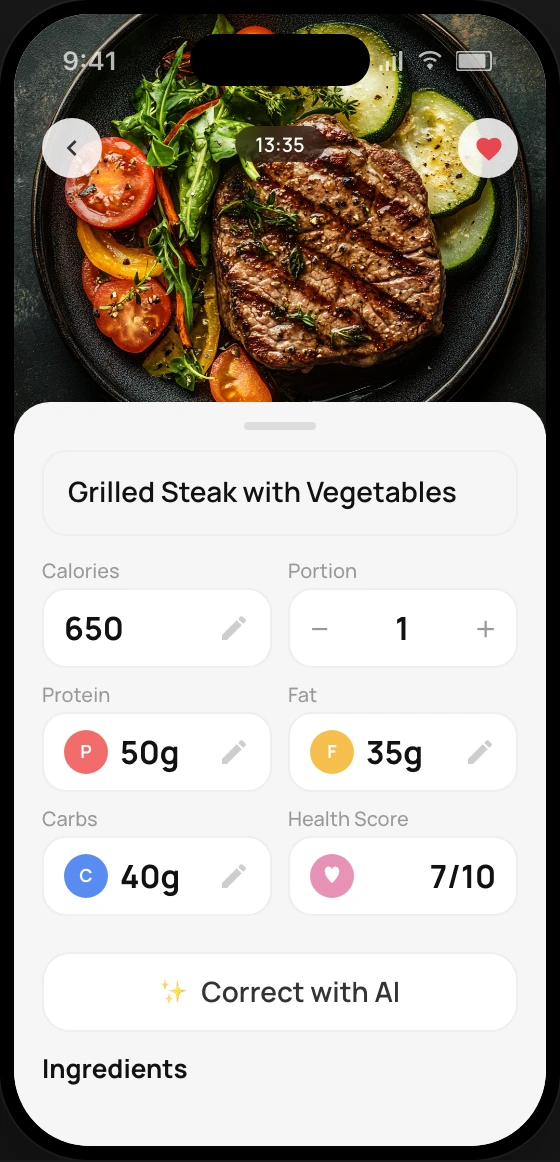
Snap a photo of your meal — CalZen AI instantly calculates calories, protein, carbs, and fat. No manual entry needed.