Cod has shaped history like no other fish — it was the protein that fueled Viking voyages, sustained the Basque whaling fleet, and triggered colonial trade wars across the Atlantic. A 100 g serving of cooked cod delivers 82 kcal, 17.8 g of protein, and just 0.7 g of fat, making it one of the leanest animal proteins in existence. That pristine white flesh with its clean, mild flavor has earned cod a permanent place in cuisines from Portuguese bacalhau to British fish and chips to Scandinavian lutefisk.
Selenium leads at 33.1 mcg per 100 g (60% DV), driving the glutathione peroxidase system that neutralizes free radicals and supports thyroid hormone conversion. Vitamin B12 (0.91 mcg, 38% DV) is critical for nerve function, DNA synthesis, and preventing megaloblastic anemia. Phosphorus (203 mg) works alongside potassium (244 mg) to maintain bone mineralization and electrolyte balance, while magnesium (32 mg) supports over 600 enzymatic reactions including energy production and muscle relaxation. Niacin (2.06 mg) and vitamin B6 (0.25 mg) keep energy metabolism and neurotransmitter synthesis running smoothly. Zinc (0.45 mg) and iron (0.38 mg) contribute to immune defense and oxygen transport. Riboflavin (0.06 mg) and pantothenic acid (0.15 mg) round out the B-vitamin profile. Cholesterol is low at 43 mg. With over 81% water content, cod is remarkably hydrating compared to other proteins and makes an excellent choice for anyone managing calorie intake without sacrificing satiety — its high protein-to-calorie ratio means you can eat a generous portion while staying well within your energy budget.
Cod's delicate texture means it needs gentle handling in the kitchen. For pan-frying, pat fillets completely dry and dust with a light coating of seasoned flour — this creates a golden crust and prevents sticking. Cook in butter or oil over medium-high heat for 3-4 minutes per side; the flesh should flake easily with a fork when done. Avoid moving the fillet until the crust has set, or it will break apart. For baking, 200 °C (400 °F) for 12-15 minutes is the sweet spot for a 2.5 cm (1-inch) fillet. Cod benefits from strong flavor companions because its own flavor is so subtle: try a caper-lemon butter sauce, a tomato-olive tapenade, or a miso glaze for a Japanese-inspired twist. Salt cod (bacalhau) is cod preserved in salt, requiring 24-48 hours of soaking before use, and is the foundation of dozens of Portuguese and Caribbean dishes. Fresh cod should smell of the ocean, never fishy, and should be consumed within one to two days of purchase.
| Nutrient | Per 100 g | Per serving |
|---|---|---|
| Calories | 82 kcal | 148 kcal |
| Protein | 17.8 g | 32.0 g |
| Fat | 0.7 g | 1.3 g |
| Carbohydrates | 0 g | 0.0 g |
| Fiber | 0 g | 0.0 g |
| Sugar | 0 g | 0.0 g |
| Water | 81.2 g | 146.2 g |
| Vitamins & Minerals | ||
| Vitamin B12 | 0.91 µg | 38% |
| Niacin (B3) | 2.06 mg | 13% |
| Vitamin B6 | 0.25 mg | 15% |
| Riboflavin (B2) | 0.06 mg | 5% |
| Pantothenic Acid (B5) | 0.15 mg | 3% |
| Selenium | 33.1 µg | 60% |
| Phosphorus | 203 mg | 16% |
| Potassium | 244 mg | 5% |
| Magnesium | 32 mg | 8% |
| Zinc | 0.45 mg | 4% |
| Iron | 0.38 mg | 2% |
| Cholesterol | 43 mg | 14% |
| Serving | Calories | Protein | Fat | Carbohydrates |
|---|---|---|---|---|
| 100 g | 82 kcal | 17.8 g | 0.7 g | 0 g |
| 1 fillet (180 g) | 148 kcal | 32.0 g | 1.3 g | 0.0 g |
| Palm-size (85 g) | 70 kcal | 15.1 g | 0.6 g | 0.0 g |
| Food | Calories | Protein | Fat | Carbohydrates |
|---|---|---|---|---|
| Cod | 82 kcal | 17.8 g | 0.7 g | 0 g |
| Shrimp | 99 kcal | 24 g | 0.3 g | 0.2 g |
| Tuna | 132 kcal | 28.2 g | 1.3 g | 0 g |
| Herring | 158 kcal | 18 g | 9 g | 0 g |
| Trout | 190 kcal | 20.5 g | 11.5 g | 0 g |
Use our calorie calculator to find your daily calorie needs.
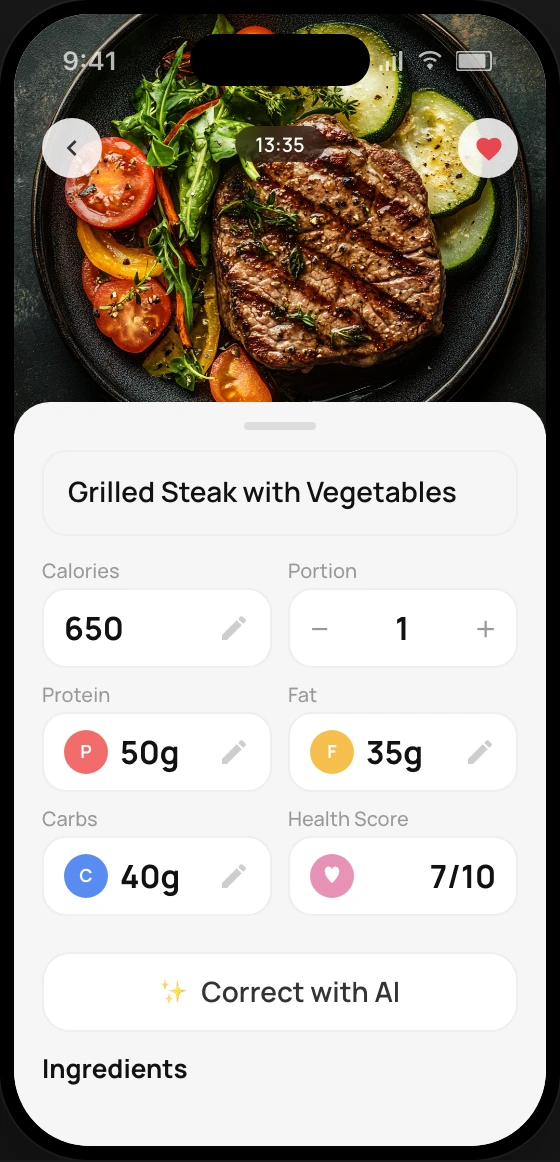
Snap a photo of your meal — CalZen AI instantly calculates calories, protein, carbs, and fat. No manual entry needed.