The humble potato has fed more of humanity than almost any other single food, and its reputation as an unhealthy starch is one of nutrition's biggest misunderstandings. At 77 kcal per 100 g with 17.5 g of carbohydrates, 2 g of protein, and a mere 0.1 g of fat, the boiled potato has the highest satiety index of any food ever tested — meaning it keeps you fuller, longer, calorie for calorie, than bread, pasta, rice, or even steak. The 0.8 g of sugar is almost negligible, 2.2 g of fiber supports gut health, and 79.2 g of water makes it far more hydrating than grains.
Vitamin C is surprisingly high at 19.7 mg per 100 g (about 22 % DV) — potatoes were historically the primary vitamin C source for Northern European populations before citrus became widely available. Vitamin B6 (0.298 mg, roughly 18 % DV) supports neurotransmitter synthesis and over 100 enzyme reactions. Potassium is the standout mineral at 425 mg per 100 g — more than bananas — helping regulate blood pressure and reduce stroke risk. Niacin (1.061 mg) supports energy metabolism and DNA repair. Iron (0.81 mg) contributes to oxygen transport, while magnesium (23 mg) and phosphorus (57 mg) support bone structure. Copper (0.11 mg) rounds out the mineral profile. When cooked and cooled, potato starch retrograde into resistant starch, which behaves like fiber — feeding gut bacteria and reducing the glycemic impact by up to 25 %.
Bake potatoes at 200 °C for 60 minutes directly on the oven rack — the dry heat creates a crispy skin full of fiber and nutrients while the interior becomes fluffy. Skip wrapping in foil, which steams instead of bakes. For the lowest glycemic impact, boil potatoes whole with the skin on, cool completely in the fridge, and reheat gently — this maximizes resistant starch formation. Roast cubed potatoes with olive oil, rosemary, and garlic at 220 °C for 35 minutes, tossing once halfway. Eat the skin whenever possible: it contains half the fiber and significant amounts of iron, potassium, and B vitamins. Store in a cool, dark place (not the fridge, which converts starch to sugar and alters texture) and away from onions, which release gases that accelerate sprouting.
| Nutrient | Per 100 g | Per serving |
|---|---|---|
| Calories | 77 kcal | 116 kcal |
| Protein | 2 g | 3.0 g |
| Fat | 0.1 g | 0.2 g |
| Carbohydrates | 17.5 g | 26.3 g |
| Fiber | 2.2 g | 3.3 g |
| Sugar | 0.8 g | 1.2 g |
| Water | 79.2 g | 118.8 g |
| Vitamins & Minerals | ||
| Vitamin C | 19.7 mg | 22% |
| Vitamin B6 | 0.298 mg | 18% |
| Niacin (B3) | 1.061 mg | 7% |
| Potassium | 425 mg | 9% |
| Iron | 0.81 mg | 5% |
| Magnesium | 23 mg | 5% |
| Phosphorus | 57 mg | 5% |
| Copper | 0.11 mg | 12% |
| Serving | Calories | Protein | Fat | Carbohydrates |
|---|---|---|---|---|
| 100 g | 77 kcal | 2 g | 0.1 g | 17.5 g |
| Medium (150 g) | 116 kcal | 3.0 g | 0.2 g | 26.3 g |
| Large (300 g) | 231 kcal | 6.0 g | 0.3 g | 52.5 g |
| Food | Calories | Protein | Fat | Carbohydrates |
|---|---|---|---|---|
| Potato | 77 kcal | 2 g | 0.1 g | 17.5 g |
| Cucumber | 15 kcal | 0.7 g | 0.1 g | 3.6 g |
| Zucchini | 17 kcal | 1.2 g | 0.3 g | 3.1 g |
| Tomato | 18 kcal | 0.9 g | 0.2 g | 3.9 g |
| Spinach | 23 kcal | 2.9 g | 0.4 g | 3.6 g |
Use our calorie calculator to find your daily calorie needs.
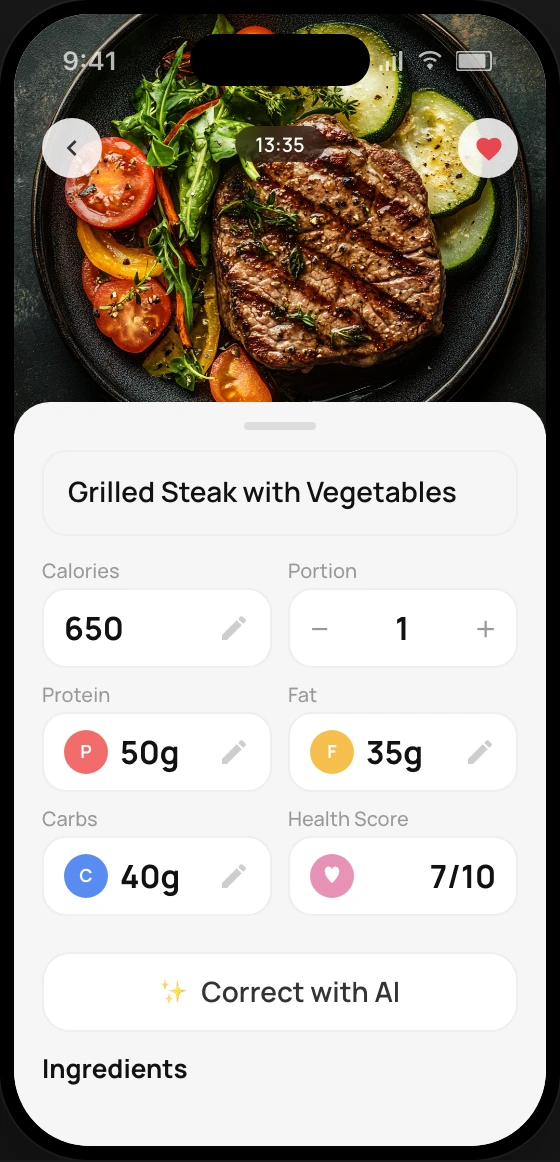
Snap a photo of your meal — CalZen AI instantly calculates calories, protein, carbs, and fat. No manual entry needed.