Salmon is arguably the single most nutritionally complete food you can put on a plate. At 208 kcal per 100 g with 20.4 g of protein and 13.4 g of fat, it delivers a rare combination of high-quality protein and long-chain omega-3 fatty acids (EPA and DHA) that no supplement can fully replicate. Wild Pacific salmon make one of nature's most grueling journeys — swimming thousands of miles upstream to spawn — and that extraordinary endurance is reflected in the density of nutrients packed into every fillet. Cultures from Scandinavian to Japanese have built entire culinary traditions around this fish for good reason.
Vitamin D is exceptional at 11 mcg per 100 g — over 70% of the Daily Value — making salmon one of the very few foods that can meaningfully move the needle on this chronically under-consumed nutrient. Vitamin B12 (3.18 mcg, 133% DV) far exceeds the daily requirement, protecting nerve fibers, fueling DNA synthesis, and preventing megaloblastic anemia. Selenium (36.5 mcg, 66% DV) activates the glutathione peroxidase system and supports thyroid hormone conversion. Niacin (8.67 mg, 54% DV) drives NAD+-dependent energy metabolism, and vitamin B6 (0.64 mg, 38% DV) is essential for hemoglobin formation and over 100 enzymatic reactions. Pantothenic acid (1.66 mg, 33% DV) feeds coenzyme A, the metabolic hub for fatty acid oxidation. Phosphorus (252 mg) and potassium (363 mg) maintain bone density and cardiovascular rhythm, while magnesium (29 mg) supports muscle relaxation and nerve transmission. Riboflavin (0.38 mg), thiamin (0.23 mg), zinc (0.64 mg), and iron (0.8 mg) round out a micronutrient profile that reads like a multivitamin label. Cholesterol is a moderate 55 mg.
For crispy-skinned fillets, pat the skin completely dry, season with salt, and place skin-side down in a hot oiled pan. Press gently with a spatula for the first 30 seconds to prevent curling, then cook for 4-5 minutes without touching it. Flip and finish for 2-3 minutes — the flesh should be translucent pink in the very center at about 52 °C (125 °F) for medium. Overcooking is salmon's worst enemy; that white albumin oozing from the surface is protein being squeezed out by excessive heat. For oven-roasting, 200 °C (400 °F) for 12-15 minutes works beautifully for a 2.5 cm (1-inch) fillet. Salmon takes to a stunning range of preparations: cure it in salt and sugar for gravlax, smoke it gently over alder wood, poach it in a court-bouillon with white wine, or simply grill it with lemon and dill. Wild-caught varieties (sockeye, king) tend to have deeper color and more intense flavor than farmed Atlantic salmon. Refrigerate fresh salmon and use within two days.
| Nutrient | Per 100 g | Per serving |
|---|---|---|
| Calories | 208 kcal | 370 kcal |
| Protein | 20.4 g | 36.3 g |
| Fat | 13.4 g | 23.9 g |
| Carbohydrates | 0 g | 0.0 g |
| Fiber | 0 g | 0.0 g |
| Sugar | 0 g | 0.0 g |
| Water | 64.9 g | 115.5 g |
| Vitamins & Minerals | ||
| Vitamin B12 | 3.18 µg | 133% |
| Vitamin D | 11 µg | 55% |
| Niacin (B3) | 8.67 mg | 54% |
| Vitamin B6 | 0.64 mg | 38% |
| Riboflavin (B2) | 0.38 mg | 29% |
| Thiamin (B1) | 0.23 mg | 19% |
| Pantothenic Acid (B5) | 1.66 mg | 33% |
| Selenium | 36.5 µg | 66% |
| Phosphorus | 252 mg | 20% |
| Potassium | 363 mg | 8% |
| Magnesium | 29 mg | 7% |
| Zinc | 0.64 mg | 6% |
| Iron | 0.8 mg | 4% |
| Cholesterol | 55 mg | 18% |
| Serving | Calories | Protein | Fat | Carbohydrates |
|---|---|---|---|---|
| 100 g | 208 kcal | 20.4 g | 13.4 g | 0 g |
| 1 fillet (178 g) | 370 kcal | 36.3 g | 23.9 g | 0.0 g |
| Palm-size (85 g) | 177 kcal | 17.3 g | 11.4 g | 0.0 g |
| Food | Calories | Protein | Fat | Carbohydrates |
|---|---|---|---|---|
| Salmon | 208 kcal | 20.4 g | 13.4 g | 0 g |
| Cod | 82 kcal | 17.8 g | 0.7 g | 0 g |
| Shrimp | 99 kcal | 24 g | 0.3 g | 0.2 g |
| Tuna | 132 kcal | 28.2 g | 1.3 g | 0 g |
| Herring | 158 kcal | 18 g | 9 g | 0 g |
Use our calorie calculator to find your daily calorie needs.
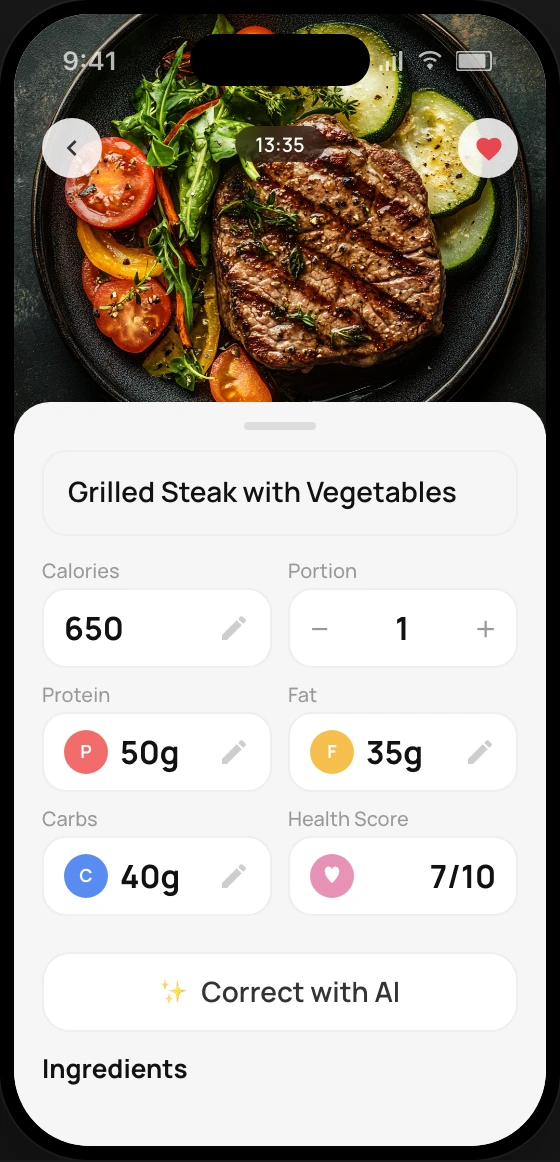
Snap a photo of your meal — CalZen AI instantly calculates calories, protein, carbs, and fat. No manual entry needed.