Few foods command the kind of cult following that bacon enjoys — its combination of smoky, salty, sweet, and umami flavors triggers an almost primal satisfaction that has made it a cultural icon. At 541 kcal per 100 g, bacon is calorie-dense with 37 g of protein and 42 g of fat, plus 1.4 g of carbohydrates from the curing process. Those numbers reflect cooked, crispy bacon; the rendering process drives off much of the water (raw bacon is about 40% water) and concentrates both nutrients and flavor into every crackling strip.
Niacin is remarkably high at 11.6 mg per 100 g (73% DV), supporting NAD+-dependent energy metabolism and cellular repair. Vitamin B12 (1.1 mcg, 46% DV) protects nerve fibers and fuels red blood cell production. Thiamin (0.44 mg, 37% DV) stands out for a meat product, driving carbohydrate-to-energy conversion. Pantothenic acid (1.14 mg) feeds coenzyme A at the metabolic crossroads of fat and protein utilization. Selenium (29.1 mcg, 53% DV) powers the glutathione system, and phosphorus (533 mg, 76% DV) is exceptionally high — critical for bone structure, ATP synthesis, and cell membrane integrity. Potassium (565 mg) helps offset sodium's blood-pressure effects, though sodium itself is significant at 1,717 mg per 100 g — something to factor into daily intake. Zinc (3.22 mg) supports immune function, iron (1.44 mg) provides bioavailable heme iron, and magnesium (33 mg) aids muscle relaxation. Cholesterol is 110 mg. Riboflavin (0.2 mg) and vitamin B6 (0.37 mg) round out a surprisingly robust micronutrient profile for what many consider an indulgence food.
Start bacon in a cold pan over medium-low heat — this renders the fat slowly and evenly, producing uniformly crispy strips rather than burnt edges with chewy centers. For the crispiest, most hands-off results, bake bacon on a wire rack set over a sheet pan at 200 °C (400 °F) for 15-20 minutes. The oven method also makes cleanup easier and lets you cook large batches at once. Save the rendered bacon fat in a jar — it is liquid gold for searing vegetables, frying eggs, or adding depth to cornbread and biscuit dough. When adding bacon to salads, pastas, or soups, cook it slightly past your ideal crispness because it will soften when mixed with other ingredients. Be mindful of the sodium: at 1,717 mg per 100 g, even a 30 g serving delivers over 500 mg, so balance the rest of your day's meals accordingly. Store opened bacon in the refrigerator for up to seven days, tightly wrapped.
| Nutrient | Per 100 g | Per serving |
|---|---|---|
| Calories | 541 kcal | 43 kcal |
| Protein | 37 g | 3.0 g |
| Fat | 42 g | 3.4 g |
| Carbohydrates | 1.4 g | 0.1 g |
| Fiber | 0 g | 0.0 g |
| Sugar | 0 g | 0.0 g |
| Water | 12.6 g | 1.0 g |
| Vitamins & Minerals | ||
| Niacin (B3) | 11.6 mg | 73% |
| Vitamin B12 | 1.1 µg | 46% |
| Vitamin B6 | 0.37 mg | 22% |
| Thiamin (B1) | 0.44 mg | 37% |
| Riboflavin (B2) | 0.2 mg | 15% |
| Pantothenic Acid (B5) | 1.14 mg | 23% |
| Selenium | 29.1 µg | 53% |
| Phosphorus | 533 mg | 43% |
| Potassium | 565 mg | 12% |
| Sodium | 1717 mg | 75% |
| Zinc | 3.22 mg | 29% |
| Iron | 1.44 mg | 8% |
| Magnesium | 33 mg | 8% |
| Cholesterol | 110 mg | 37% |
| Serving | Calories | Protein | Fat | Carbohydrates |
|---|---|---|---|---|
| 100 g | 541 kcal | 37 g | 42 g | 1.4 g |
| 1 slice cooked (8 g) | 43 kcal | 3.0 g | 3.4 g | 0.1 g |
| 3 slices (24 g) | 130 kcal | 8.9 g | 10.1 g | 0.3 g |
| Food | Calories | Protein | Fat | Carbohydrates |
|---|---|---|---|---|
| Bacon | 541 kcal | 37 g | 42 g | 1.4 g |
| Turkey Breast | 135 kcal | 30.1 g | 1 g | 0 g |
| Ham | 145 kcal | 21.6 g | 5.5 g | 1.5 g |
| Chicken Breast | 165 kcal | 31 g | 3.6 g | 0 g |
| Chicken Thigh | 209 kcal | 26 g | 10.9 g | 0 g |
Use our calorie calculator to find your daily calorie needs.
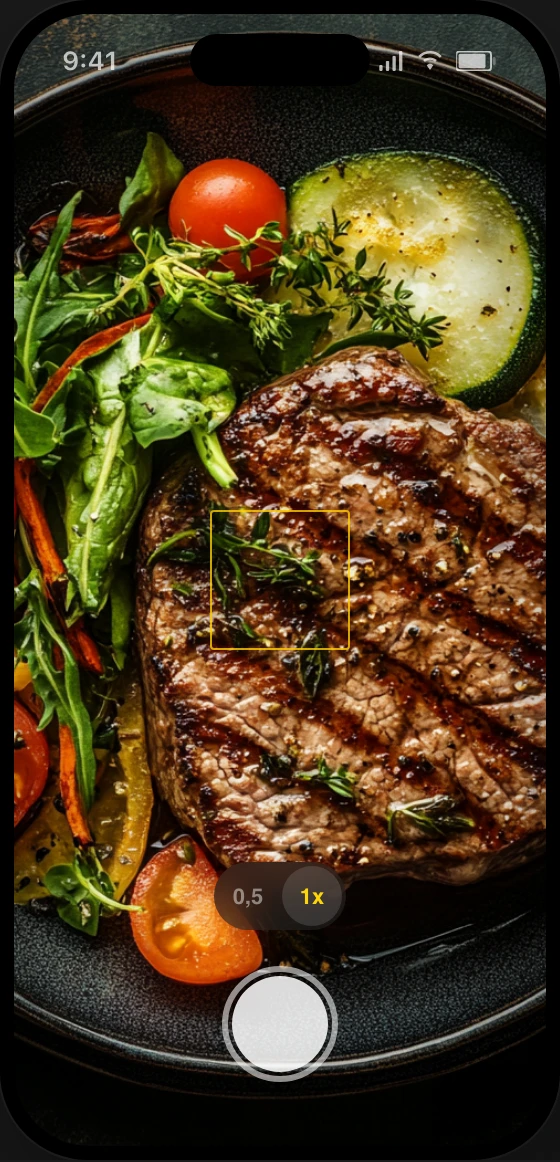
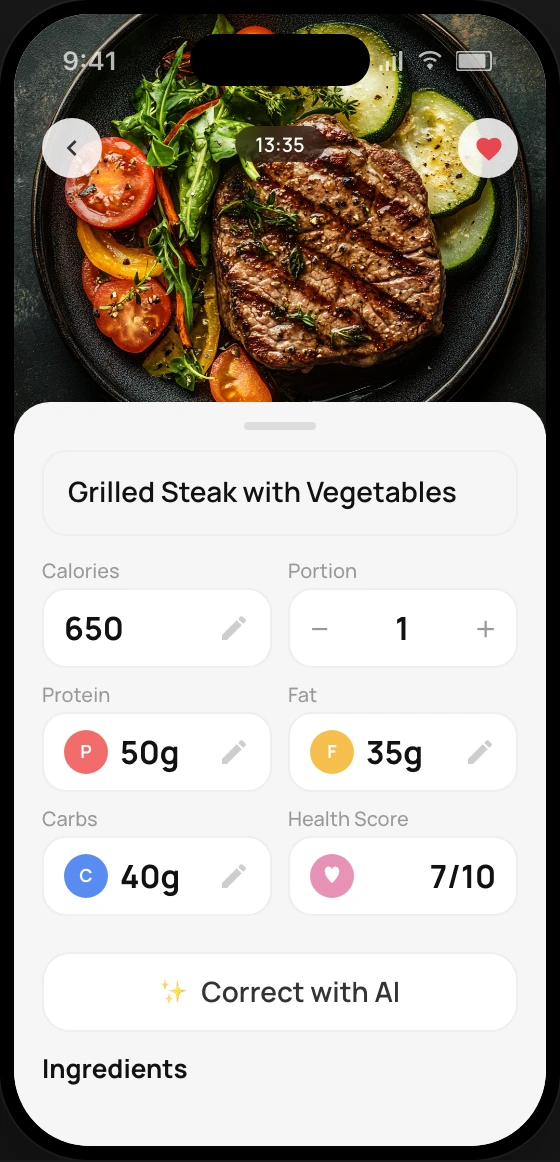
Snap a photo of your meal — CalZen AI instantly calculates calories, protein, carbs, and fat. No manual entry needed.