Duck occupies a unique niche among poultry — richer, more robust, and closer to red meat in flavor and fat content than chicken or turkey. At 337 kcal per 100 g with 19 g of protein and 28.4 g of fat, it is undeniably indulgent, but that generous fat layer is what creates the impossibly crispy skin and succulent flesh that have made Peking duck, confit de canard, and roasted magret icons of world cuisine. Much of the fat sits in a thick subcutaneous layer beneath the skin, which can be rendered out during cooking, leaving behind crackling skin and significantly leaner meat.
Iron stands out at 2.7 mg per 100 g — higher than chicken, turkey, or pork — delivered in the highly absorbable heme form that makes duck particularly beneficial for preventing iron-deficiency anemia. Riboflavin (0.47 mg, 36% DV) is notably elevated, driving the flavin-dependent enzymes that power mitochondrial energy production. Pantothenic acid (1.5 mg, 30% DV) feeds the coenzyme A pathway central to fat and protein metabolism. Niacin (5.3 mg) supports cellular energy and DNA repair, while vitamin B12 (0.4 mcg) maintains nerve health and red blood cell formation. Vitamin B6 (0.18 mg) contributes to amino acid metabolism. Selenium (14.2 mcg) provides antioxidant defense, and phosphorus (139 mg) supports bone structure alongside potassium (204 mg), which regulates blood pressure and muscle function. Zinc (1.86 mg) aids immune response, and thiamin (0.17 mg) assists carbohydrate metabolism. Cholesterol is 84 mg — actually lower than chicken thigh. Magnesium (15 mg) supports enzymatic reactions throughout the body.
The key to perfect duck is rendering the fat. Score the skin in a crosshatch pattern without cutting into the flesh, then start the breast skin-side down in a cold pan. Cook over medium-low heat for 12-15 minutes — the fat will melt away, basting the meat and crisping the skin to a golden, cracker-like finish. Flip and sear the flesh side for just 3-4 minutes, then rest for 10 minutes before slicing. For a whole roast duck, prick the skin all over with a pin, pour boiling water over it (this tightens the skin), and roast at 180 °C (350 °F) for about 2 hours, draining the fat periodically. Save every drop of rendered duck fat — it is extraordinary for roasting potatoes, searing vegetables, or making confit. Duck pairs beautifully with tart fruit sauces: cherry, orange, plum, and raspberry all cut through the richness. Store fresh duck in the refrigerator for up to two days.
| Nutrient | Per 100 g | Per serving |
|---|---|---|
| Calories | 337 kcal | 512 kcal |
| Protein | 19 g | 28.9 g |
| Fat | 28.4 g | 43.2 g |
| Carbohydrates | 0 g | 0.0 g |
| Fiber | 0 g | 0.0 g |
| Sugar | 0 g | 0.0 g |
| Water | 48.5 g | 73.7 g |
| Vitamins & Minerals | ||
| Niacin (B3) | 5.3 mg | 33% |
| Vitamin B6 | 0.18 mg | 11% |
| Vitamin B12 | 0.4 µg | 17% |
| Riboflavin (B2) | 0.47 mg | 36% |
| Pantothenic Acid (B5) | 1.5 mg | 30% |
| Thiamin (B1) | 0.17 mg | 14% |
| Iron | 2.7 mg | 15% |
| Selenium | 14.2 µg | 26% |
| Phosphorus | 139 mg | 11% |
| Potassium | 204 mg | 4% |
| Zinc | 1.86 mg | 17% |
| Magnesium | 15 mg | 4% |
| Cholesterol | 84 mg | 28% |
| Serving | Calories | Protein | Fat | Carbohydrates |
|---|---|---|---|---|
| 100 g | 337 kcal | 19 g | 28.4 g | 0 g |
| ½ breast (152 g) | 512 kcal | 28.9 g | 43.2 g | 0.0 g |
| Palm-size (85 g) | 286 kcal | 16.1 g | 24.1 g | 0.0 g |
| Food | Calories | Protein | Fat | Carbohydrates |
|---|---|---|---|---|
| Duck | 337 kcal | 19 g | 28.4 g | 0 g |
| Turkey Breast | 135 kcal | 30.1 g | 1 g | 0 g |
| Ham | 145 kcal | 21.6 g | 5.5 g | 1.5 g |
| Chicken Breast | 165 kcal | 31 g | 3.6 g | 0 g |
| Chicken Thigh | 209 kcal | 26 g | 10.9 g | 0 g |
Use our calorie calculator to find your daily calorie needs.
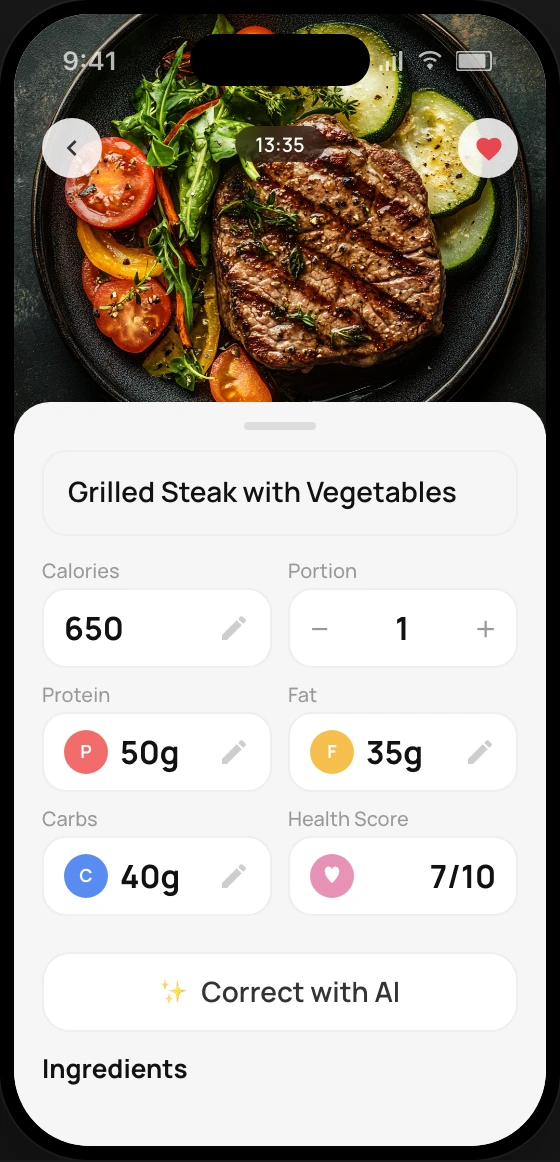
Snap a photo of your meal — CalZen AI instantly calculates calories, protein, carbs, and fat. No manual entry needed.