Granola walks a fine line between health food and dessert — at 471 kcal per 100 g, it packs more energy per gram than many candy bars, with 10.3 g of protein, 20.3 g of fat, 64.4 g of carbohydrates, and a notable 24.5 g of sugar. Yet it also delivers 5 g of fiber and a genuine array of minerals from its base of oats, nuts, and seeds. The disconnect between perception and reality makes granola one of the most misunderstood pantry staples: a 60 g bowl — the amount most people pour without thinking — contains 283 kcal before milk. Granola was patented in 1881 by a doctor at a sanitarium in Dansville, New York, and has been marketed as a health food ever since, despite its caloric density.
Manganese (2.5 mg, 109% DV) from the oats and nuts activates superoxide dismutase, a critical antioxidant enzyme. Magnesium (110 mg, 26% DV) supports over 300 enzyme reactions including muscle relaxation and insulin sensitivity. Iron (3.5 mg, 19% DV) aids oxygen transport. Phosphorus (260 mg, 37% DV) builds bones and powers ATP production. Zinc (2.8 mg, 25% DV) supports immune function. Copper (0.35 mg, 39% DV) assists iron absorption. Selenium (14 mcg, 25% DV) protects thyroid tissue. Thiamin (0.3 mg, 25% DV) drives carbohydrate metabolism. The 24.5 g of sugar is the nutritional elephant in the room — a significant portion of the daily limit — and varies enormously between brands. The oat base contributes beta-glucan fiber, though the quantity is diluted by nuts, oil, and sweeteners compared to plain oatmeal.
Homemade granola lets you control the sugar: mix 300 g rolled oats with 50 ml maple syrup (or honey), 50 ml coconut oil, a pinch of salt, and your choice of nuts and seeds. Spread on a parchment-lined baking sheet in an even layer and bake at 150°C (300°F) for 25-30 minutes, stirring once halfway. Do not touch it after removing from the oven — it crisps as it cools, and stirring breaks the clusters everyone wants. Add dried fruit after baking (it burns in the oven). A portion-controlled serving is 30-40 g — about 1/3 cup — which delivers the crunch and nutrition without the calorie overload. Use granola as a topping on yogurt or smoothie bowls rather than eating it by the bowlful with milk. Store in an airtight container for up to 3 weeks at room temperature; homemade granola without preservatives stales faster than commercial versions.
| Nutrient | Per 100 g | Per serving |
|---|---|---|
| Calories | 471 kcal | 565 kcal |
| Protein | 10.3 g | 12.4 g |
| Fat | 20.3 g | 24.4 g |
| Carbohydrates | 64.4 g | 77.3 g |
| Fiber | 5 g | 6.0 g |
| Sugar | 24.5 g | 29.4 g |
| Water | 3 g | 3.6 g |
| Vitamins & Minerals | ||
| Iron | 3.5 mg | 19% |
| Magnesium | 110 mg | 26% |
| Manganese | 2.5 mg | 109% |
| Zinc | 2.8 mg | 25% |
| Phosphorus | 260 mg | 21% |
| Copper | 0.35 mg | 39% |
| Thiamin (B1) | 0.3 mg | 25% |
| Selenium | 14 µg | 25% |
| Serving | Calories | Protein | Fat | Carbohydrates |
|---|---|---|---|---|
| 100 g | 471 kcal | 10.3 g | 20.3 g | 64.4 g |
| 1 cup (120 g) | 565 kcal | 12.4 g | 24.4 g | 77.3 g |
| ½ cup (60 g) | 283 kcal | 6.2 g | 12.2 g | 38.6 g |
| Food | Calories | Protein | Fat | Carbohydrates |
|---|---|---|---|---|
| Granola | 471 kcal | 10.3 g | 20.3 g | 64.4 g |
| Oat Milk | 43 kcal | 0.4 g | 1.4 g | 7 g |
| Sushi (California roll) | 143 kcal | 5.8 g | 2 g | 26.1 g |
| Hummus | 166 kcal | 7.9 g | 9.6 g | 14.3 g |
| Pizza (cheese) | 266 kcal | 11.4 g | 10.4 g | 33 g |
Use our calorie calculator to find your daily calorie needs.
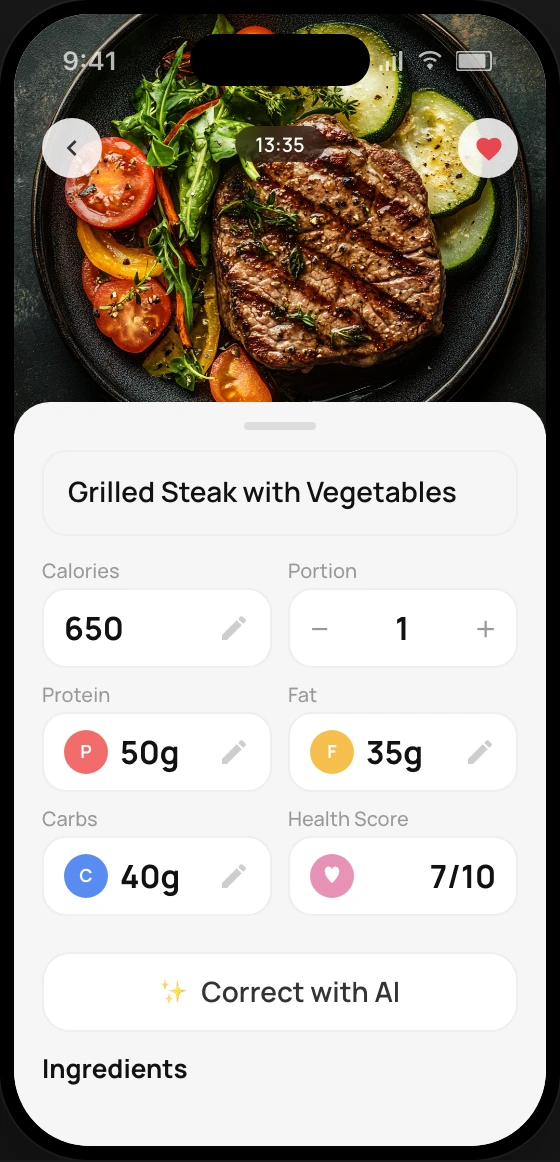
Snap a photo of your meal — CalZen AI instantly calculates calories, protein, carbs, and fat. No manual entry needed.