Honey is the only food produced by insects that humans consume — a golden liquid that bees create from flower nectar through a remarkable process of enzymatic conversion and evaporation. At 304 kcal per 100 g, it is almost pure carbohydrate: 82.4 g of sugars (roughly equal parts fructose and glucose), with trace amounts of protein (0.3 g), zero fat, and 0.2 g of fiber. The 17.1 g of water is precisely what makes honey shelf-stable — below 18% moisture, the sugar concentration is too high for microorganisms to survive. Archaeologists have found 3,000-year-old honey in Egyptian tombs that was still perfectly edible — making it quite literally the only food that never spoils.
Honey's micronutrient profile is minimal by weight — iron (0.4 mg), potassium (52 mg), calcium (6 mg), and phosphorus (4 mg) — but its real nutritional value lies in bioactive compounds that standard nutrition databases don't capture. Raw honey contains hydrogen peroxide, bee defensin-1, and methylglyoxal (especially in Manuka honey), compounds with clinically demonstrated antibacterial properties. The glucose oxidase enzyme, added by bees during production, generates a slow, steady release of hydrogen peroxide that makes honey an effective wound dressing — used in medicine from ancient Egypt to modern hospital burn units. Honey also contains over 200 different substances including amino acids, organic acids, and polyphenol antioxidants whose composition varies with the flower source. Darker honeys (buckwheat, manuka) contain significantly more antioxidants than lighter varieties.
Choose raw, unfiltered honey when possible — commercial processing (heating to 70°C+ and ultra-filtering) destroys the enzymes, pollen, and many bioactive compounds that give honey its unique properties beyond simple sugar. Never heat honey above 40°C (104°F) if you want to preserve its enzymatic activity. For sore throats, a tablespoon of raw honey has been shown in clinical trials to be as effective as dextromethorphan (a common cough suppressant) in reducing nighttime cough. In baking, substitute honey for sugar at a 3:4 ratio (3/4 cup honey per 1 cup sugar) and reduce oven temperature by 15°C to prevent over-browning. Crystallization is natural and does not indicate spoilage — gently warm the jar in a bowl of warm water to reliquefy. Store in a sealed glass jar at room temperature indefinitely. Never give honey to children under 12 months due to the risk of infant botulism from Clostridium botulinum spores.
| Nutrient | Per 100 g | Per serving |
|---|---|---|
| Calories | 304 kcal | 64 kcal |
| Protein | 0.3 g | 0.1 g |
| Fat | 0 g | 0.0 g |
| Carbohydrates | 82.4 g | 17.3 g |
| Fiber | 0.2 g | 0.0 g |
| Sugar | 82.1 g | 17.2 g |
| Water | 17.1 g | 3.6 g |
| Vitamins & Minerals | ||
| Iron | 0.4 mg | 2% |
| Potassium | 52 mg | 1% |
| Calcium | 6 mg | 0% |
| Phosphorus | 4 mg | 0% |
| Serving | Calories | Protein | Fat | Carbohydrates |
|---|---|---|---|---|
| 100 g | 304 kcal | 0.3 g | 0 g | 82.4 g |
| 1 tbsp (21 g) | 64 kcal | 0.1 g | 0.0 g | 17.3 g |
| 1 tsp (7 g) | 21 kcal | 0.0 g | 0.0 g | 5.8 g |
| Food | Calories | Protein | Fat | Carbohydrates |
|---|---|---|---|---|
| Honey | 304 kcal | 0.3 g | 0 g | 82.4 g |
| Oat Milk | 43 kcal | 0.4 g | 1.4 g | 7 g |
| Sushi (California roll) | 143 kcal | 5.8 g | 2 g | 26.1 g |
| Hummus | 166 kcal | 7.9 g | 9.6 g | 14.3 g |
| Pizza (cheese) | 266 kcal | 11.4 g | 10.4 g | 33 g |
Use our calorie calculator to find your daily calorie needs.
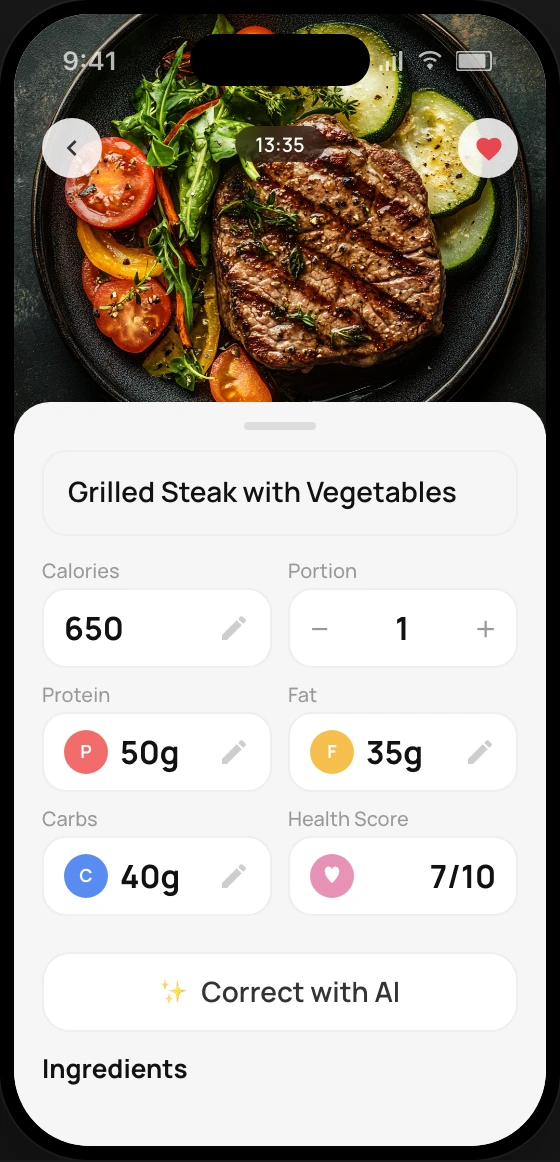
Snap a photo of your meal — CalZen AI instantly calculates calories, protein, carbs, and fat. No manual entry needed.