Peanut butter is America's most beloved spread — a $4 billion industry built on the simple magic of ground roasted peanuts. At 588 kcal per 100 g, it is one of the most calorie-dense whole foods available: 25.1 g of protein (more than most meats per serving), 50.4 g of fat (predominantly monounsaturated oleic acid), 20 g of carbohydrates, and 6 g of fiber. Two tablespoons (32 g) delivers about 190 kcal and 7 g of protein — making it the basis of countless quick meals for athletes, students, and busy families. Peanut butter was popularized at the 1904 World's Fair in St. Louis, and Americans now consume over 700 million pounds annually — enough to coat the floor of the Grand Canyon.
Niacin is peanut butter's standout vitamin at 13.4 mg per 100 g (84% DV) — the highest of any common spread, driving over 400 metabolic reactions in the body. Vitamin E (9 mg, 60% DV) is a fat-soluble antioxidant that protects cell membranes from oxidative damage. Magnesium (160 mg, 38% DV) supports muscle and nerve function, blood sugar regulation, and blood pressure control. Potassium (649 mg, 14% DV) works alongside magnesium for cardiovascular health. Phosphorus (358 mg, 51% DV) is structural in bones and every cell membrane. Iron (1.7 mg, 9% DV) and zinc (2.5 mg, 23% DV) support oxygen transport and immune function. Copper (0.42 mg, 47% DV) and manganese (1.5 mg, 65% DV) activate critical enzyme systems. B6 (0.44 mg, 26% DV) powers neurotransmitter synthesis. The complete package makes peanut butter genuinely one of the most micronutrient-dense foods per dollar in any grocery store.
Read the ingredient list: the best peanut butter contains exactly one ingredient — roasted peanuts — or at most two (peanuts and salt). Avoid brands with added sugar, hydrogenated oils, or palm oil. Natural peanut butter separates; stir it once, store upside-down, and refrigerate after opening to prevent further separation. For the creamiest texture in smoothies, use 2 tablespoons blended with banana, milk, and a handful of ice. Peanut butter on whole wheat toast with sliced banana delivers a near-perfect breakfast macro split. In savory cooking, it forms the base of Thai satay sauce (mix with soy sauce, lime, chili, and coconut milk) and West African groundnut stew. A 32 g serving is the standard portion — measure it until your eye calibrates, because the caloric density means that "eyeballed" servings are often 50-100% larger than intended. Store opened jars in the refrigerator for up to 6 months.
| Nutrient | Per 100 g | Per serving |
|---|---|---|
| Calories | 588 kcal | 94 kcal |
| Protein | 25.1 g | 4.0 g |
| Fat | 50.4 g | 8.1 g |
| Carbohydrates | 20 g | 3.2 g |
| Fiber | 6 g | 1.0 g |
| Sugar | 9.2 g | 1.5 g |
| Water | 1.2 g | 0.2 g |
| Vitamins & Minerals | ||
| Magnesium | 160 mg | 38% |
| Potassium | 649 mg | 14% |
| Vitamin E | 9 mg | 60% |
| Niacin (B3) | 13.4 mg | 84% |
| Iron | 1.7 mg | 9% |
| Phosphorus | 358 mg | 29% |
| Zinc | 2.5 mg | 23% |
| Vitamin B6 | 0.44 mg | 26% |
| Copper | 0.42 mg | 47% |
| Manganese | 1.5 mg | 65% |
| Serving | Calories | Protein | Fat | Carbohydrates |
|---|---|---|---|---|
| 100 g | 588 kcal | 25.1 g | 50.4 g | 20 g |
| 1 tbsp (16 g) | 94 kcal | 4.0 g | 8.1 g | 3.2 g |
| 2 tbsp (32 g) | 188 kcal | 8.0 g | 16.1 g | 6.4 g |
| Food | Calories | Protein | Fat | Carbohydrates |
|---|---|---|---|---|
| Peanut Butter | 588 kcal | 25.1 g | 50.4 g | 20 g |
| Oat Milk | 43 kcal | 0.4 g | 1.4 g | 7 g |
| Sushi (California roll) | 143 kcal | 5.8 g | 2 g | 26.1 g |
| Hummus | 166 kcal | 7.9 g | 9.6 g | 14.3 g |
| Pizza (cheese) | 266 kcal | 11.4 g | 10.4 g | 33 g |
Use our calorie calculator to find your daily calorie needs.
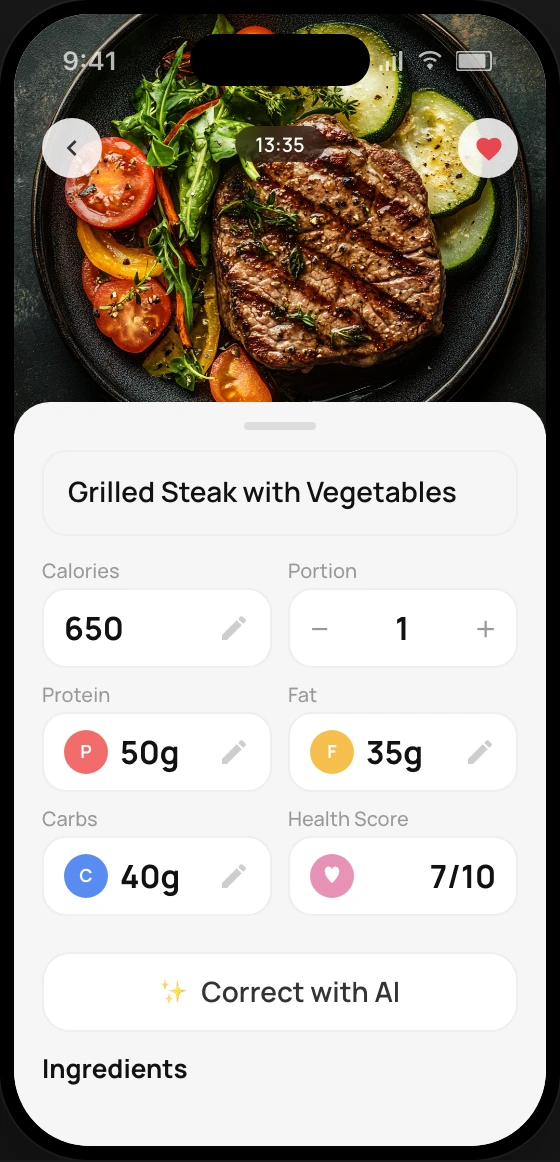
Snap a photo of your meal — CalZen AI instantly calculates calories, protein, carbs, and fat. No manual entry needed.